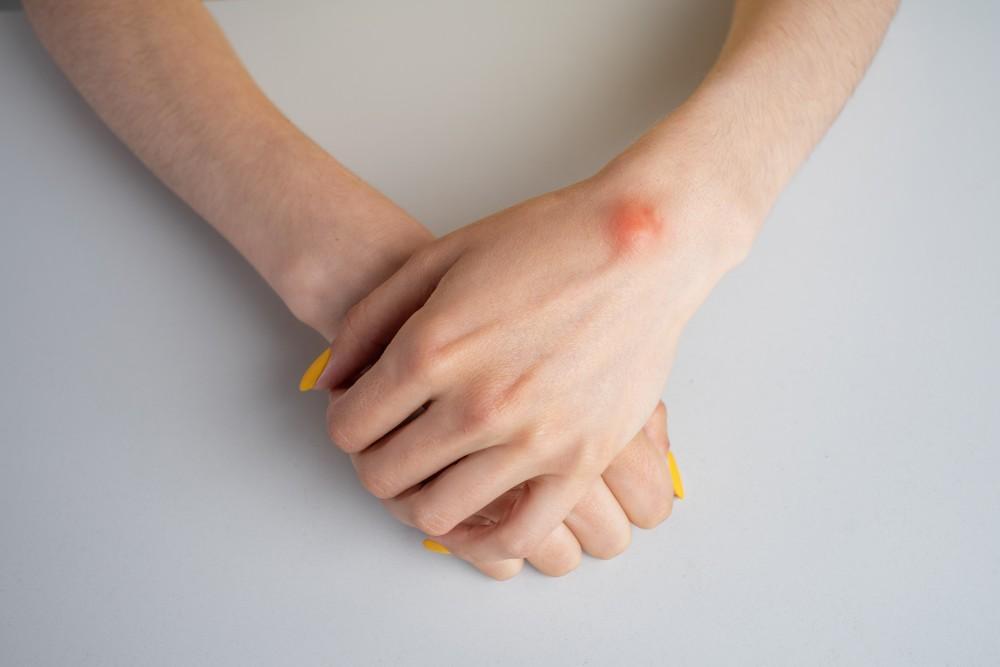
Ganglion Cysts – Causes and Treatments
Ganglion Cysts are a common condition we see at Elite Sports Medicine + Orthopedics. This noncancerous lump can most commonly be seen on the top of the hand, but can also be found in the knee, feet, or ankles. The lump is usually a raised circle and is filled with a jelly-like fluid. Depending on if the lump is close to a nerve, it can be painful to touch. They range in size anywhere from 1 cm to 2.5 cm around.
Symptoms of a Ganglion Cyst
The location of the cyst is usually a good indicator. Ganglion cysts are found most commonly along the tendons or joints of the wrist, feet, or ankles and less commonly on the knees or other joints. Ganglion cysts are also usually round or oval-shaped lump that can be seen in the skin.
Pain- Ganglion Cysts tend to fluctuate in size based on repetitive use. For instance, if you start throwing the football more with your son, the cyst could worsen and swell in size. Symptoms of the cyst are usually visual, but if the cyst is close to a nerve it could cause pain when pressed.
When to See a Doctor for a Ganglion Cyst
If the cyst rapidly fluctuates in size or is causing pain, it is a good idea to see a doctor. An orthopedic doctor who specializes in the hand and upper extremities will be able to properly diagnose you and give you the best treatment plan. If pain is substantial, surgery can be performed to remove the cyst.
Treatments for a Ganglion Cyst
Depending on the size, a doctor can drain the fluid from the cyst, however, it is likely the cyst could return. Continual removal of the fluid can cause an increased risk of infection,
Immobilization– Your doctor may provide you with a brace or splint to decrease the repetition of motion in the joint, in turn reducing the swelling of the cyst.
Drainage– An orthopedic surgeon or their team will be able to drain the cyst if necessary.
Surgery- If all other more conservative treatment methods have failed, surgery may be the next best option. The orthopedic hand surgeon will remove both the cyst and the stalk that is attached to the joint or tendon. The surgery is considered very safe, however, it does not mean the cyst will never come back.
Home Remedies to Avoid:
The “wack” method of slamming a book on the lump is highly discouraged by our hand specialists. The force of the blow can damage the nerves or structure of the hand, making the pain worse.
Conclusion-
It is important to first consult with your doctor if you have concerns with your ganglion cyst. They will be able to properly diagnose you and rule out any other concerns there may be with the lump. You can schedule an appointment with one of our Nashville hand specialists today.


Author: AMWN Dev
Related Articles

Elite Sports Medicine + Orthopedics is proud to welcome William B. Gilbert Jr., M.D., to our growing team of orthopedic specialists. Dr. Gilbert is a [...]

Elite Sports Medicine + Orthopedics is proud to welcome Mihir J. Desai, M.D., FAOA, to our growing team of orthopedic specialists. Dr. Desai is a [...]

Recovering from a sports injury can be about more than returning to competition. It can shape the course of a person's future. For former Belmont [...]

We are proud to share that ten of our physicians at Elite Sports Medicine and Orthopedics have been named Nashville Top Doctors by Castle Connolly [...]

Thumb arthritis can make everyday tasks like opening jars, turning keys, gripping objects, and pinching painful and frustrating. For patients with advanced thumb arthritis who [...]

Shoulder pain is one of the most common reasons patients visit a sports medicine specialist or orthopedic doctor. It affects athletes, active adults, and [...]

Joint pain is one of the most common health complaints across all age groups. Most everyday aches improve with rest, ice, or over-the-counter medication—but sometimes [...]
When athletes think about improving performance, the focus often lands on strength training, conditioning, and skill development. One critical factor is often overlooked: foot health. [...]

When we talk about sports injuries, we often picture athletes sprinting down a field or pushing through an intense workout. But you don’t have to [...]
In April 2024, Suzanne’s life changed almost instantly. What started as a normal Sunday evening turned into a frightening medical emergency, and her experience shows [...]