When athletes think about improving performance, the focus often lands on strength training, conditioning, and skill development. One critical factor is often overlooked: foot health. Your feet are the foundation of nearly every athletic movement, and how well they function directly affects performance, efficiency, and injury risk. From sprinting and jumping to cutting and landing, healthy feet play a central role in keeping athletes strong and competitive.
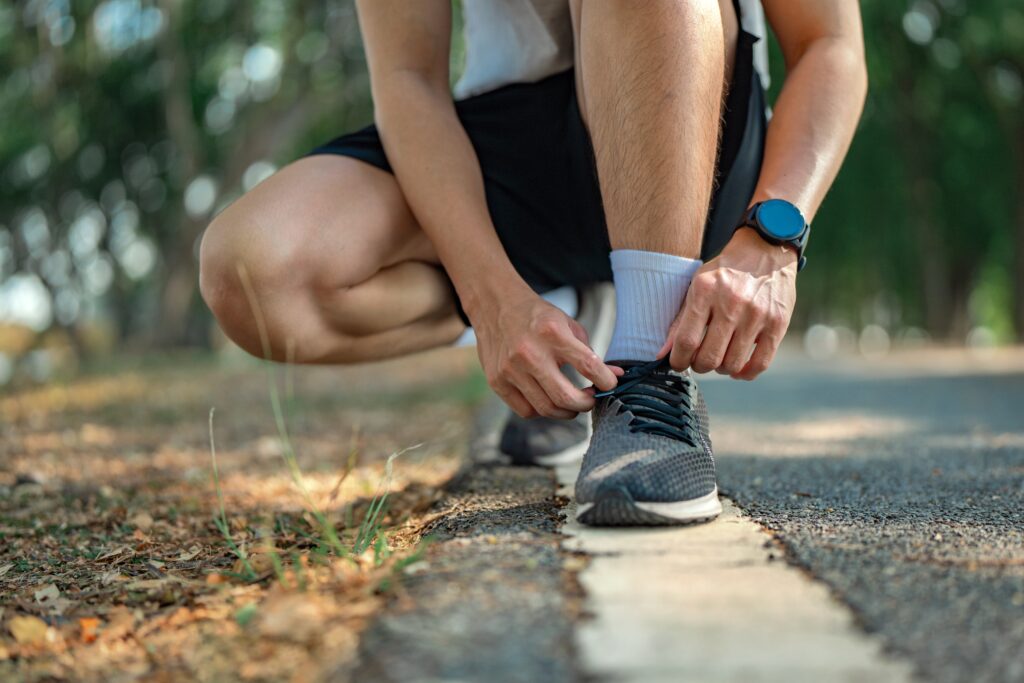
Why Foot Health Matters
Foot function is essential to athletic performance because the feet serve as the body’s primary connection to the ground. Strong, mobile, and well-coordinated feet allow for efficient force transfer through the kinetic chain, influencing balance, speed, agility, and power. When foot mechanics are compromised, the body often compensates at the ankles, knees, hips, or lower back, increasing injury risk and limiting performance potential.
Research published in the British Journal of Sports Medicine emphasizes the importance of the Foot Core System, which includes the intrinsic foot muscles responsible for stability and dynamic control. A strong foot core supports the arch, helps absorb and release force, and improves balance and propulsion. Together, these elements enhance athletic performance while supporting long-term injury prevention.
Common Foot Injuries in Athletes
Many sports-related injuries originate in the feet. Recognizing common conditions early can help athletes take proactive steps to stay healthy:
- Plantar Fasciitis: Characterized by sharp heel pain, often worse with the first steps after rest. This condition results from irritation of the plantar fascia and can often be improved with targeted stretching and strengthening.
- Achilles Tendon Injuries: Overuse, inadequate warm-ups, or improper footwear can lead to Achilles inflammation or tears. Preventive strategies include progressive loading, calf strengthening, and proper recovery. Rest, ice, compression, and elevation are commonly used during flare-ups.
- Stress Fractures: Small cracks in the bones of the foot, frequently affecting the metatarsals or navicular bone. These injuries typically develop from repetitive stress and insufficient recovery.
- Ankle Sprains: Occur when the foot rolls or twists beyond its normal range, stretching or tearing ligaments. Balance training and supportive footwear can reduce risk.
- Turf Toe: A hyperextension injury of the big toe joint, common in sports played on artificial surfaces. Supportive shoes, taping, and strengthening exercises help protect the joint.
Footwear: Your First Line of Defense
Proper footwear plays a major role in foot health and athletic performance. Shoes should be sport-specific and provide the right balance of support, stability, and cushioning. Worn or ill-fitting shoes can alter foot mechanics and place excessive stress on joints and soft tissue.
Tips for Choosing the Right Athletic Shoes:
- Match the Shoe to the Sport
Different sports place unique demands on the feet. Choose footwear designed for your specific activity. - Prioritize Proper Fit
Shoes should allow room for toe movement while offering secure support through the arch and heel. - Replace Shoes Regularly
Cushioning and support break down over time, even if the shoe looks intact.
Strength, Mobility, and Recovery
Foot health extends beyond footwear alone. Incorporating foot and ankle strengthening, balance training, and mobility exercises improves force absorption, stability, and overall control. Targeting the intrinsic foot muscles, calves, and ankle joints helps optimize performance while reducing injury risk.
Recovery is just as important. Monitoring training volume, addressing discomfort early, and allowing adequate rest can prevent overuse injuries and keep athletes moving well throughout the season.
Building Performance From the Ground Up
Strong, mobile, and well-supported feet are the foundation of athletic performance. By prioritizing foot health, athletes can move more efficiently, reduce injury risk, and stay active longer.
Start by wearing supportive shoes, strengthening your arches, and paying attention to early warning signs like pain or stiffness. Every movement begins at the feet, and taking care of them is one of the smartest investments an athlete can make.
Take the Next Step in Foot Health
If you’re dealing with foot pain or want a professional evaluation, consider scheduling an appointment with one of the Nashville foot and ankle specialists at Elite Sports Medicine and Orthopedics. Our team works with athletes of all levels to reduce injury risk, improve movement, and support long-term performance.
Sources
Admin. (2025, July 28). The role of foot health in enhancing athletic performance. HealthCarter.
Maddox, M. (2023, August 19). How do feet affect athletic performance? RunningShorts.
McKeon, P., Hertel, J., Bramble, D., & Davis, I. (2014). The foot core system: A new paradigm for understanding intrinsic foot muscle function. British Journal of Sports Medicine.
Monaco, J. (2023, December 8). Foot injuries in sports and how to treat them. Ankle & Foot Centers of America.
SOLE. (n.d.). The best insoles for sports and athletes.

Author: Nick Flory
Related Articles

Elite Sports Medicine + Orthopedics is proud to welcome William B. Gilbert Jr., M.D., to our growing team of orthopedic specialists. Dr. Gilbert is a [...]

Elite Sports Medicine + Orthopedics is proud to welcome Mihir J. Desai, M.D., FAOA, to our growing team of orthopedic specialists. Dr. Desai is a [...]

Recovering from a sports injury can be about more than returning to competition. It can shape the course of a person's future. For former Belmont [...]

We are proud to share that ten of our physicians at Elite Sports Medicine and Orthopedics have been named Nashville Top Doctors by Castle Connolly [...]
Thumb arthritis can make everyday tasks like opening jars, turning keys, gripping objects, and pinching painful and frustrating. For patients with advanced thumb arthritis who [...]

Shoulder pain is one of the most common reasons patients visit a sports medicine specialist or orthopedic doctor. It affects athletes, active adults, and [...]

Joint pain is one of the most common health complaints across all age groups. Most everyday aches improve with rest, ice, or over-the-counter medication—but sometimes [...]

When we talk about sports injuries, we often picture athletes sprinting down a field or pushing through an intense workout. But you don’t have to [...]

In April 2024, Suzanne’s life changed almost instantly. What started as a normal Sunday evening turned into a frightening medical emergency, and her experience shows [...]

Staying active as we age isn’t just about fitness. It’s about staying independent, energetic, and living life on your terms. As more adults embrace active [...]